Pomodoro vs Flowtime Technique: Which Focus Method Works Best?
Not everyone works best on a fixed timer. While the Pomodoro Technique has helped millions of people build focus through structured 25 minute sessions, some find the rigid schedule breaks their concentration right when they hit their stride. This is where the Flowtime Technique comes in.
This article compares Pomodoro and Flowtime, explains how each method works, and helps you decide which one suits your focus style better.
What Is the Pomodoro Technique
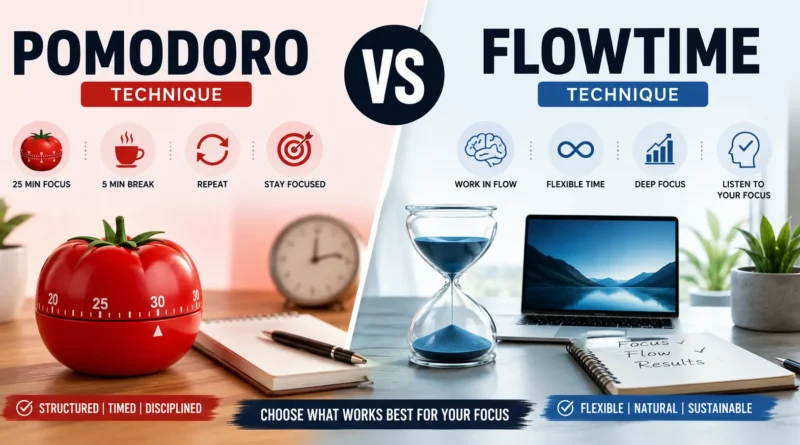
The Pomodoro Technique is a time management strategy that breaks work into fixed 25 minute sessions, followed by a 5 minute break. After four sessions, you take a longer break of 15 to 30 minutes. The timer is set before you start, and the schedule does not change based on how the work is going.
This structure works well for people who need external pressure to stay on task and avoid distractions.
What Is the Flowtime Technique
The Flowtime Technique is a more flexible approach to focused work. Instead of setting a fixed timer in advance, you start working and simply note the time you began. You keep working until you naturally feel your focus fading, then take a break. The length of the break usually depends on how long you worked, with longer work sessions earning longer breaks.
The core idea behind Flowtime is that focus does not follow a fixed schedule. Some tasks pull you into deep concentration for an hour or more, while others feel draining after just 15 minutes. Flowtime lets the task and your energy levels decide when to pause, rather than an external timer.
Key Differences Between Pomodoro and Flowtime
Both methods aim to protect focus and prevent burnout, but they take different approaches to get there.
Timing structure. Pomodoro uses a fixed 25 minute cycle every time. Flowtime uses variable work periods based on how long your focus naturally lasts.
Flexibility. Pomodoro requires stopping at a set time, even if you are deeply focused. Flowtime allows you to continue working as long as concentration holds, avoiding unnecessary interruptions.
Tracking. Pomodoro tracking is simple, since each session is the same length. Flowtime tracking requires logging start and stop times manually, which takes a bit more discipline.
Best use case. Pomodoro works well for tasks that are repetitive or prone to procrastination, since the short timer makes starting easier. Flowtime works well for deep, creative, or complex tasks where interruptions can break valuable momentum.
Break length. Pomodoro breaks are fixed at 5 minutes, with longer breaks after every fourth session. Flowtime breaks scale with how long you worked, so a 90 minute focus session might earn a longer recovery break than a 20 minute one.
Benefits of the Pomodoro Technique
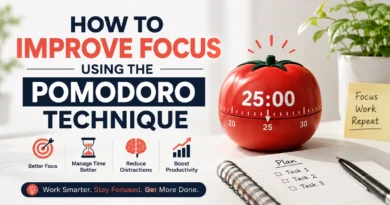
Pomodoro offers a low barrier to starting work, since committing to 25 minutes feels manageable even for tasks you have been avoiding. The fixed structure also removes decision making from the equation entirely, since you always know when the next break is coming. For a full breakdown of how to set up the method and use it effectively, this guide on how to improve focus using the Pomodoro Technique walks through the process step by step.
Benefits of the Flowtime Technique
Flowtime respects the natural rhythm of focus instead of forcing it into fixed boxes. This makes it especially useful for tasks that require sustained concentration, such as writing, research, design work, or debugging complex code. Since you are not interrupted mid flow, the quality of deep work often improves. Flowtime also builds self awareness over time, since tracking your own focus patterns helps you understand when you work best during the day.
Drawbacks to Consider
Pomodoro’s fixed timer can feel disruptive during tasks that need longer, uninterrupted focus, cutting off momentum right when it builds. It can also feel too rigid for people whose energy and attention naturally fluctuate throughout the day.
Flowtime requires more self discipline, since there is no external timer forcing a break. Without careful tracking, it is easy to either burn out from working too long or lose structure entirely. It also demands more manual logging, which some people find tedious compared to a simple preset timer.
Can You Combine Pomodoro and Flowtime
Some people mix elements of both methods depending on the task at hand. Repetitive or low focus tasks, such as email or administrative work, can use Pomodoro’s fixed timer to stay on track. Deep, creative, or complex tasks can use Flowtime’s flexible approach to protect momentum once focus kicks in.
This is similar to how Pomodoro can also work alongside time blocking, where broader time blocks are scheduled for the day, and the focus method used within each block is chosen based on the nature of the task.
How to Choose the Right Method for You
If you tend to procrastinate or get distracted easily, the fixed structure of Pomodoro is likely the better starting point, since it removes the temptation to keep checking your phone before the timer runs out. If your work involves deep, creative, or complex thinking that benefits from long, uninterrupted stretches, Flowtime is likely a better fit, since it will not cut off your momentum at an arbitrary point.
Testing both for a week each on similar types of tasks is the most reliable way to see which one matches your natural focus patterns.
FAQs
Which method is better for deep work, Pomodoro or Flowtime?
Flowtime is generally better for deep work since it allows focus sessions to run as long as concentration naturally lasts, without a fixed cutoff.
Is Flowtime harder to start than Pomodoro?
Flowtime can feel harder to start for people who benefit from external structure, since there is no fixed timer creating urgency. Pomodoro is usually easier for building an initial focus habit.
Do I need an app to use the Flowtime Technique?
No, though tracking apps or a simple notebook can help log start and stop times, which makes it easier to spot your natural focus patterns over time.
Can beginners use Flowtime effectively?
Yes, but beginners often find Pomodoro easier to start with since it removes the guesswork of deciding when to take a break.
Is one technique scientifically better than the other?
Neither method has strong scientific consensus proving universal superiority. Both are grounded in focused work and recovery principles, and effectiveness often depends on the task type and individual focus patterns.
Final Thoughts
Pomodoro and Flowtime both aim to protect focus, but they take opposite approaches to get there. Pomodoro offers structure and predictability, while Flowtime offers flexibility that respects your natural concentration span. Choosing between them, or combining them based on the task, comes down to understanding how your focus actually works throughout the day.