Search Intent: Meaning, Types & Real Examples
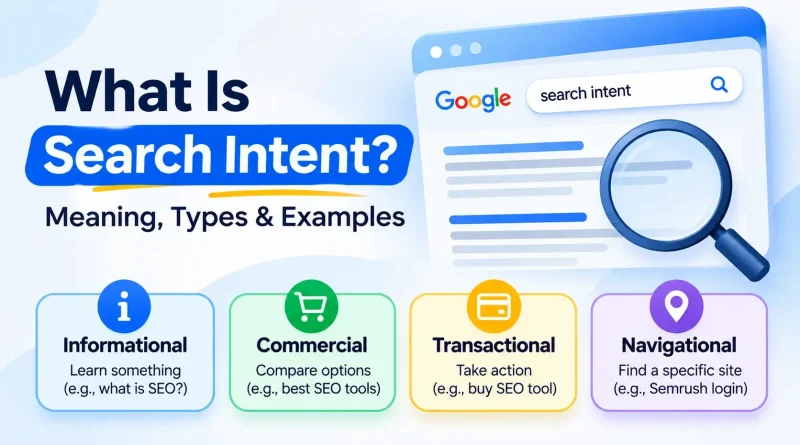
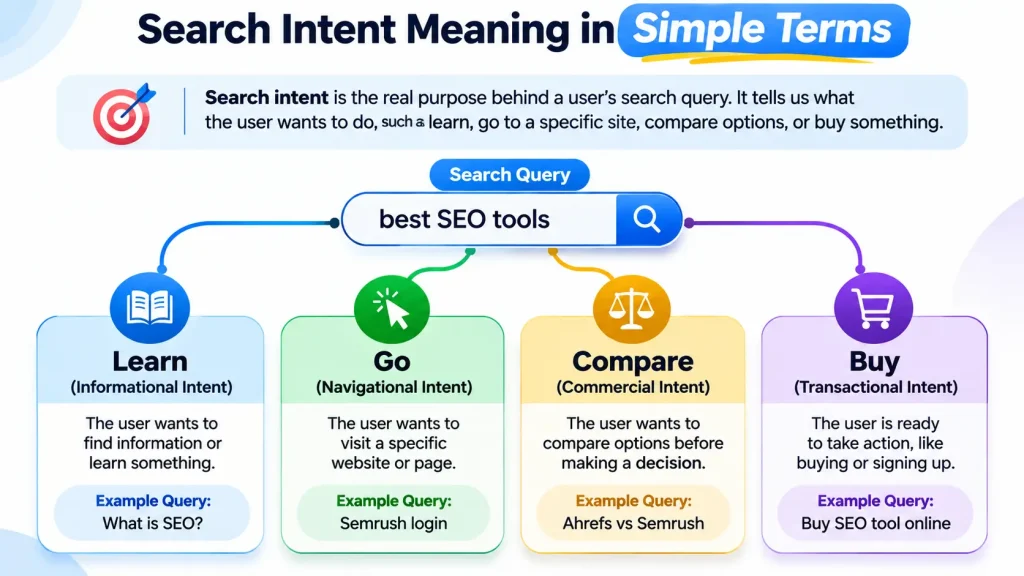
Search intent is the reason a person types a query into a search engine. It is the goal behind the words, such as learning something, finding a specific website, comparing options, or buying a product.
The four main types of search intent are informational, navigational, commercial, and transactional. Pages that match the intent of a query tend to rank. Pages that miss it usually do not, however well written they are.
Primary intent target: informational (people want a clear definition, types, and examples).
Global target: English-speaking readers worldwide, with examples that are not tied to one country.
Search Intent Meaning in Simple Terms
Every search has a purpose. Someone typing “weather tomorrow” wants a forecast. Someone typing “facebook login” wants one specific page. Someone typing “buy wireless earbuds” is ready to pay.
Search engines study these patterns closely. Google’s Search Quality Rater Guidelines describe queries in terms of what the searcher wants to know, do, or reach. Because of this, ranking is no longer only about matching words. It is about matching the need behind them.
The idea is older than modern SEO. In 2002, researcher Andrei Broder published “A Taxonomy of Web Search,” which split queries into informational, navigational, and transactional groups. Most intent models used today grew out of that paper.
Why Search Intent Matters for SEO
Search engines want to show pages that satisfy the searcher quickly. A page that answers a different question than the one asked gets ignored, even with strong backlinks and clean technical SEO.
Matching intent affects several things:
- Rankings: Google tests which result types satisfy a query and shows those.
- Click through rate: a title and description that match the need earn more clicks.
- Engagement: visitors who find what they expected stay longer and move deeper into the site.
- Conversions: the right page type for the right stage of the buying process sells more.
In practice, a common reason a page stalls on page two is an intent mismatch. A product page targeting “how to choose a laptop” will struggle against guides, because the results show people want advice first.
This is why intent should be checked during keyword research, before any page is planned or written.
Types of Search Intent
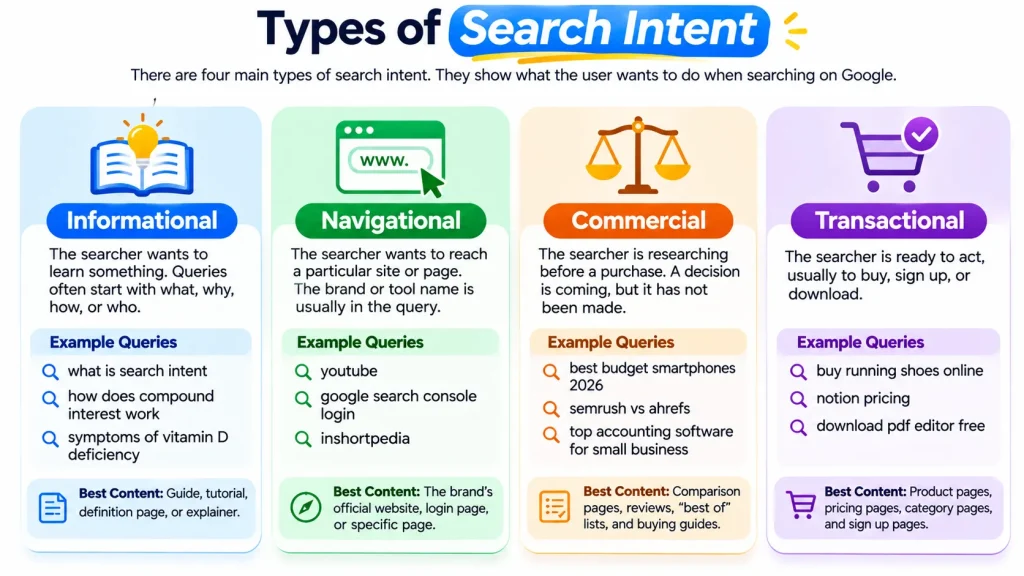
There are four widely used types of search intent. Some SEO tools add more labels, but these four cover most queries.
Informational Search Intent
Informational intent means the searcher wants to learn something. These queries often start with what, why, how, or who.
Examples:
- what is search intent
- how does compound interest work
- symptoms of vitamin D deficiency
The best content here is a guide, tutorial, definition page, or explainer. Direct answers, clear headings, and examples work well.
Navigational Search Intent
Navigational intent means the searcher wants to reach a particular site or page. The brand or tool name is usually in the query.
Examples:
- youtube
- google search console login
- inshortpedia
Ranking for another brand’s navigational query is rarely possible or useful. The priority is to own the results for the brand’s own name.
Commercial Search Intent
Commercial intent (also called commercial investigation) means the searcher is researching before a purchase. A decision is coming, but it has not been made.
Examples:
- best budget smartphones 2026
- semrush vs ahrefs
- top accounting software for small business
Comparison pages, reviews, “best of” lists, and buying guides fit this intent.
Transactional Search Intent
Transactional intent means the searcher is ready to act, usually to buy, sign up, or download.
Examples:
- buy running shoes online
- notion pricing
- download pdf editor free
Product pages, pricing pages, category pages, and sign up pages work best. Long educational content tends to underperform here.
Search Intent Types Compared
| Intent type | Searcher goal | Common query words | Best content format | Funnel stage |
|---|---|---|---|---|
| Informational | Learn or understand | what, how, why, guide, meaning | Blog post, guide, tutorial | Awareness |
| Navigational | Reach a specific site | Brand name, login, official site | Homepage, login page, brand page | Any stage |
| Commercial | Compare before buying | best, vs, review, top, alternatives | Comparison, review, roundup | Consideration |
| Transactional | Buy or sign up | buy, price, discount, order, download | Product page, pricing page | Decision |
Search Intent Examples With Real Queries
The table below shows how similar topics produce different intent. The “typical results” column describes the result types that commonly appear on Google for such queries. These vary by location and time, so a live check is always needed.
| Query | Intent | Typical results |
|---|---|---|
| how to tie running shoes | Informational | Step guides, videos |
| best running shoes for flat feet | Commercial | Review roundups, comparison lists |
| nike pegasus vs brooks ghost | Commercial | Head to head comparisons |
| buy running shoes online | Transactional | Retail category pages, product listings |
| nike store | Navigational | Brand homepage, store locator |
Notice how one subject, running shoes, covers all four intents. A single page cannot serve all of them well. Each intent needs its own page.
[Image 2: search-intent-examples-serp-comparison.png]
Mixed and Local Intent
Some queries carry more than one intent. “iPhone 16” could mean specs (informational), reviews (commercial), or a purchase (transactional). Google often fills the first page with a blend of result types for these.
Local intent is another common pattern. Queries like “dentist near me” or “pharmacy open now” ask for nearby businesses, so maps and local listings dominate the results.
How to Identify Search Intent: Step by Step
Reading intent correctly before writing saves time. This process works for any keyword.
Step 1: Search the Keyword on Google
Use a private or incognito window to reduce personalization. Note what appears on the first page.
Step 2: Check the Result Types
Look at what ranks. Blog posts suggest informational intent. Product pages suggest transactional intent. Listicles and comparisons suggest commercial intent.
Step 3: Study the SERP Features
SERP features reveal intent quickly:
- Featured snippets and People Also Ask boxes point to informational intent.
- Shopping carousels and product ads point to transactional intent.
- Map packs point to local intent.
- Sitelinks under one brand point to navigational intent.
[Image 3: serp-features-search-intent-signals.png]
Step 4: Read the Top Three Pages
Check the format, depth, and angle. Is it a list, a how to, or a definition? Note the headings the top pages share, since these show what searchers expect to find.
Step 5: Check the Keyword Modifiers
Words like “best,” “vs,” “buy,” “how to,” and “near me” signal intent directly.
Step 6: Confirm With Search Console Data
For existing pages, open the Performance report in Google Search Console and filter by query. If a page gets impressions for queries that do not match its purpose, the page and the intent are misaligned.
How to Optimize Content for Search Intent
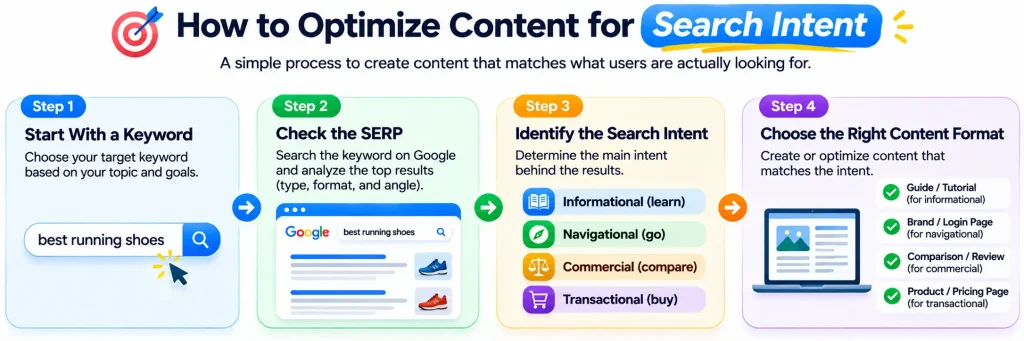
Once intent is clear, the page needs to be built around it.
- Match the format. If the top results are step by step guides, a long opinion essay will struggle.
- Answer fast. Put the direct answer in the first few lines, then expand.
- Cover the related questions. Use the People Also Ask box to find follow up questions and add them as sections.
- Align the title and meta description. They should promise what the page delivers.
- Add the right next step. An informational post can link to a comparison. A comparison can link to a product page.
- Keep one main intent per page. Mixing a guide and a sales page weakens both.
A useful habit is to review older posts every few months. Intent can shift. A query that once returned articles may begin returning tools or videos.
Common Search Intent Mistakes
| Mistake | Why it hurts | Fix |
|---|---|---|
| Writing a blog post for a transactional keyword | Searchers want to buy, not read | Build a product or category page |
| Selling too early on an informational query | Visitors leave before trust is built | Educate first, then link to a solution |
| Targeting one keyword with several similar pages | Pages compete with each other | Merge into one stronger page |
| Ignoring SERP format | Page type does not match what Google shows | Copy the dominant format, then add depth |
| Guessing intent from the keyword alone | Words can mislead | Always check the live results |
Tools That Help Analyze Search Intent
- Google Search Console: shows real queries and which pages receive them.
- Google Search itself: the most reliable intent check, since it shows the current results.
- Semrush and Ahrefs: both label keywords with intent categories, which helps when sorting large keyword lists. These labels are automated, so a manual SERP check is still needed.
- AlsoAsked and People Also Ask boxes: reveal related questions behind a topic.
Search Intent Related FAQs
What is search intent in SEO?
Search intent in SEO is the goal a searcher has when entering a query. It decides what kind of page a search engine considers a good result. Content that matches intent ranks better than content that only matches keywords.
What are the 4 types of search intent?
The four types are informational, navigational, commercial, and transactional. Informational queries seek knowledge, navigational queries seek a specific site, commercial queries compare options, and transactional queries aim to complete a purchase or action.
How do I find the search intent of a keyword?
Search the keyword on Google and study the first page. The result types, SERP features, and query modifiers show what searchers expect. Google Search Console adds data on real queries for pages that already exist.
Can one keyword have more than one search intent?
Yes. Queries such as a product name can be informational, commercial, and transactional at once. Google often shows a mix of result types for these, and the strongest approach is to target the dominant intent on the page.
Does search intent change over time?
It can. Trends, new products, and changes in Google’s results can shift what searchers expect. Rechecking the live results for important keywords every few months keeps content aligned.
Is search intent the same as keyword research?
No. Keyword research finds the terms people use. Search intent explains why they use them. Both are needed to plan content that ranks and satisfies the reader.