
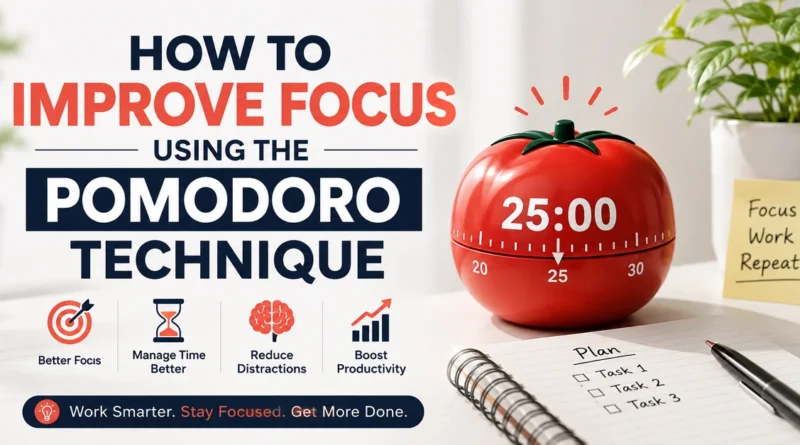
How to Improve Focus Using the Pomodoro Technique
Staying focused feels harder than ever. Notifications, open browser tabs, and endless to do lists pull attention in different directions every few minutes. The Pomodoro Technique offers a simple fix. It breaks work into short, timed sessions so your brain can concentrate on one task without feeling overwhelmed.
This guide explains what the Pomodoro Technique is, how it works, and how you can use it to build stronger focus starting today.
What Is the Pomodoro Technique
The Pomodoro Technique is a time management method created by Francesco Cirillo in the late 1980s. The name comes from the tomato shaped kitchen timer he used while studying at university.
The method is built around a simple idea. Instead of working for hours without a break, you work in short, focused bursts called pomodoros, followed by short rests. Each pomodoro usually lasts 25 minutes, followed by a 5 minute break. After four pomodoros, you take a longer break of 15 to 30 minutes.
This structure trains your brain to focus for a fixed period, knowing that rest is coming soon. It removes the pressure of working nonstop and replaces it with a rhythm your mind can actually sustain.
Why the Pomodoro Technique Works for Focus
Human attention naturally dips after 20 to 30 minutes of concentrated effort. Long, unbroken work sessions often lead to mental fatigue, procrastination, and lower quality output. The Pomodoro Technique works with your brain instead of against it.
Here is why it helps improve focus so effectively.
It creates urgency. A visible timer makes the task feel time bound, which reduces the temptation to check your phone or drift into distractions.
It reduces decision fatigue. You are not deciding when to take a break. The schedule decides for you, so your energy goes into the task itself.
It prevents burnout. Regular breaks stop mental exhaustion before it builds up, so you can work longer overall without feeling drained.
It builds momentum. Completing one pomodoro often motivates you to start another, creating a natural flow state over time.
How to Use the Pomodoro Technique Step by Step
Getting started with the Pomodoro Technique takes just a few minutes. Follow these steps to build your first focused work session.
Step 1: Choose One Task
Pick a single task you want to focus on. Avoid multitasking during a pomodoro. Working on one clear task keeps your brain from switching contexts, which is one of the biggest drains on focus.
Step 2: Set a Timer for 25 Minutes
Use a phone timer, a kitchen timer, or a dedicated Pomodoro app. The exact number does not need to be 25 minutes forever, but starting with the classic interval helps you learn the rhythm.
Step 3: Work Until the Timer Rings
Commit fully to the task for those 25 minutes. If a distracting thought or task comes up, write it down quickly on a notepad and return to your work immediately.
Step 4: Take a 5 Minute Break
Step away from your screen. Stretch, walk around, drink water, or simply rest your eyes. Avoid checking social media, since it can pull you out of focus mode and make the next session harder to start.
Step 5: Repeat and Take a Longer Break
After completing four pomodoros, take a longer break of 15 to 30 minutes. This gives your brain time to fully recover before the next work cycle begins.
Tips to Get the Most Out of the Pomodoro Technique
A few small adjustments can make this method even more effective for improving focus.
- Track your pomodoros. Marking each completed session gives you a visual sense of progress and keeps you motivated through the day.
- Adjust the timing to fit your work. Some tasks suit shorter 15 minute bursts, while deep creative work may benefit from 45 minute sessions with longer breaks.
- Silence notifications during work blocks. Turn off phone alerts and close unrelated browser tabs before starting the timer.
- Batch similar tasks together. Group small tasks like emails or admin work into a single pomodoro instead of spreading them across the day.
- Protect your breaks. Skipping breaks to keep working defeats the purpose of the method and leads to faster burnout.
Common Mistakes to Avoid
Many people struggle with the Pomodoro Technique at first because of a few avoidable habits.
Working through the timer instead of stopping for a break reduces the recovery benefit the method is built around. Choosing tasks that are too large for one pomodoro can also create frustration, so it helps to break big projects into smaller, session sized pieces. Finally, using break time to check emails or social media often makes it harder to refocus, since the brain does not get a true reset.
Frequently Asked Questions
How long is one Pomodoro session?
A standard Pomodoro session lasts 25 minutes of focused work, followed by a 5 minute break.
Can I change the 25 minute interval?
Yes. The 25 minute interval is a starting point. Many people adjust it based on their attention span and the type of task, using intervals between 15 and 50 minutes.
Is the Pomodoro Technique good for ADHD?
Many people with ADHD find the technique helpful because it breaks work into manageable chunks and reduces the pressure of long, unstructured work sessions. Results vary from person to person.
How many pomodoros should I do in a day?
Most people complete 8 to 12 pomodoros in a productive workday, though this depends on the nature of the tasks and personal energy levels.
Do I need a special app to use the Pomodoro Technique?
No. A simple timer is enough. Dedicated Pomodoro apps can add helpful features like tracking and reminders, but they are not required to get started.
Final Thoughts
The Pomodoro Technique is a simple, low effort way to train your brain for better focus. By working in short, timed bursts and protecting your breaks, you build a sustainable rhythm that reduces burnout and increases productivity. Start with one pomodoro today, and let the structure guide you toward deeper, more consistent focus.