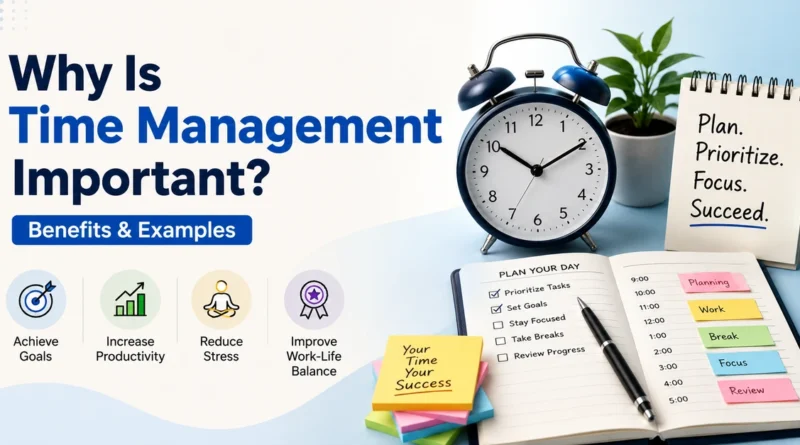
Why Is Time Management Important? Benefits & Examples
Time is the one resource everyone gets in equal amount, yet very few people use it well. Time management is the skill of planning and controlling how you spend your hours so you get more done with less stress. Whether you are a student, an employee, or a business owner, learning how to manage time can change the way you work and live.
In this article, we will explain what time management means, why it matters, its key benefits, and real-life examples you can apply today.
What Is Time Management?
Time management means organizing your tasks and daily schedule so you can complete your work efficiently. It includes setting goals, prioritizing tasks, avoiding distractions, and using tools like planners, calendars, or apps to stay on track.
Good time management is not about doing more work in less time. It is about doing the right work at the right time, so you reach your goals without burning out.
Why Is Time Management Important?
Poor time management leads to missed deadlines, high stress, and low-quality work. On the other hand, when you manage time well, you gain control over your day instead of letting the day control you.
Here are the main reasons time management matters:
1. It Reduces Stress and Anxiety
When tasks pile up without a plan, it creates mental pressure. Knowing what to do and when to do it removes the guesswork and helps you feel calm and in control.
Example: A student who plans study sessions a week before exams feels far less anxious than one who starts studying the night before.
2. It Improves Productivity and Efficiency
Time management helps you focus on high-value tasks first instead of jumping between random activities. This leads to faster results and better quality work.
Example: A marketing manager who blocks two hours every morning for deep work (like writing campaign strategy) gets more done than someone who checks email all day and works whenever they find time.
3. It Helps You Meet Deadlines
When you break big projects into smaller tasks with clear timelines, you are far less likely to miss a deadline. This builds trust and reliability at work.
4. It Improves Decision-Making
When you are not rushing, you think more clearly. Good time management gives you space to plan, weigh options, and make smarter choices instead of reacting under pressure.
5. It Creates Better Work-Life Balance
Managing time well means you finish work on time and still have hours left for family, hobbies, and rest. This balance is key to long-term happiness and avoiding burnout.
6. It Boosts Confidence and Self-Discipline
Every time you complete a task on schedule, it builds self-trust. Over time, this habit strengthens discipline and motivation, making bigger goals feel achievable.
7. It Opens Room for Growth
When your daily tasks are under control, you naturally find time to learn new skills, plan for the future, or start new projects, things that often get ignored when life feels chaotic.
Key Benefits of Time Management (At a Glance)
| Benefit | What It Means |
|---|---|
| Less stress | Fewer last-minute rushes and panic |
| Higher productivity | More output in less time |
| Better focus | Fewer distractions, clearer priorities |
| On-time delivery | Deadlines met consistently |
| Better decisions | Time to think before acting |
| Improved balance | More time for rest and personal life |
| Stronger reputation | Seen as reliable and organized |
Real-Life Examples of Time Management in Action
In the Workplace: A project manager uses a to-do list and prioritizes tasks using the Eisenhower Matrix (urgent vs. important). This helps the team avoid wasting time on low-priority work and finish the project three days early.
In Studies: A college student creates a weekly study timetable, dedicating fixed hours to each subject. Instead of cramming, they review small portions daily, leading to better grades and less exam stress.
In Daily Life: A working parent sets a morning routine, waking up 30 minutes earlier to plan the day’s tasks. This small change gives them more control over the entire day and reduces evening chaos.
In Business: A small business owner uses time-blocking to separate hours for sales calls, admin work, and customer support. This structure prevents tasks from overlapping and improves overall output.
Simple Time Management Techniques You Can Try
- Prioritize tasks using the Eisenhower Matrix (urgent/important)
- Time-block your calendar for focused work sessions
- Use the Pomodoro Technique (25 minutes work, 5 minutes break)
- Set SMART goals (Specific, Measurable, Achievable, Relevant, Time-bound)
- Avoid multitasking, it often reduces quality and speed
- Review your day each evening to plan for tomorrow
Final Thoughts
Time management is not just a productivity trend, it is a life skill that affects your career, health, and happiness. When you plan your time well, you reduce stress, get more done, and still have room for rest and personal growth. Start small: pick one technique from this article, apply it for a week, and notice the difference in how you feel and perform.