What is Vitamin B12?
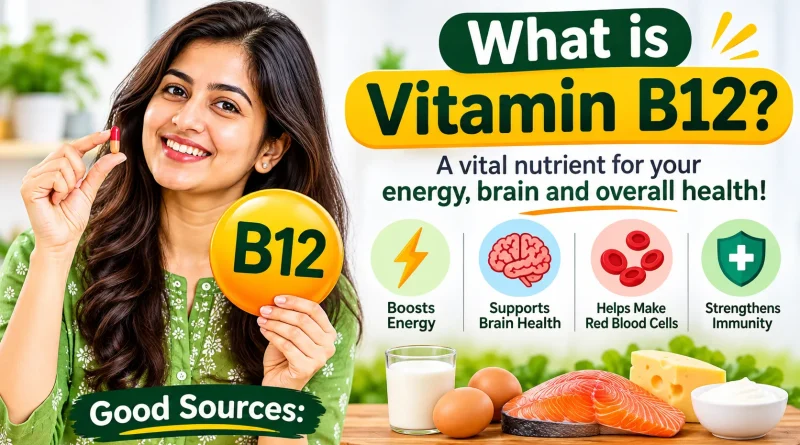
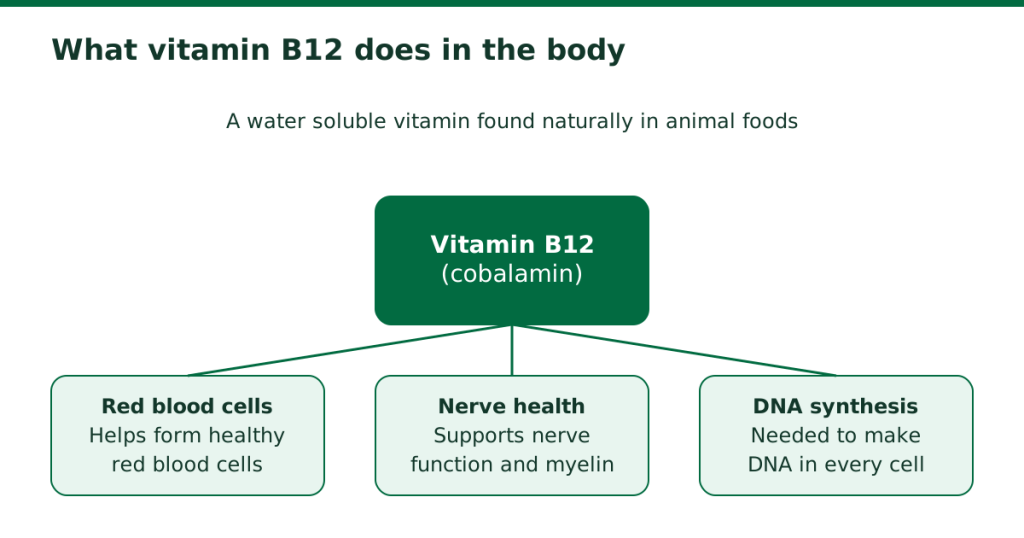
Vitamin B12, also called cobalamin, is a water soluble vitamin that the body needs to make red blood cells, keep nerve cells healthy, and build DNA. The body cannot make it, so it must come from animal foods, fortified foods, or supplements. Adults need 2.4 micrograms (mcg) per day, according to the US National Institutes of Health (NIH).
What Vitamin B12 Does in the Body
Vitamin B12 works in three main areas. The vitamin contains the mineral cobalt, which is why compounds with B12 activity are called cobalamins. Methylcobalamin and adenosylcobalamin are the two active forms used by the body.
Red Blood Cell Formation
B12 helps the body make healthy red blood cells. Low levels can cause megaloblastic anemia, a blood condition that leaves people tired and weak.
Nerve Function
B12 is needed for the development and myelination (the protective coating) of nerve cells.
DNA Synthesis
B12 helps make the genetic material found in every cell.
How the Body Absorbs Vitamin B12
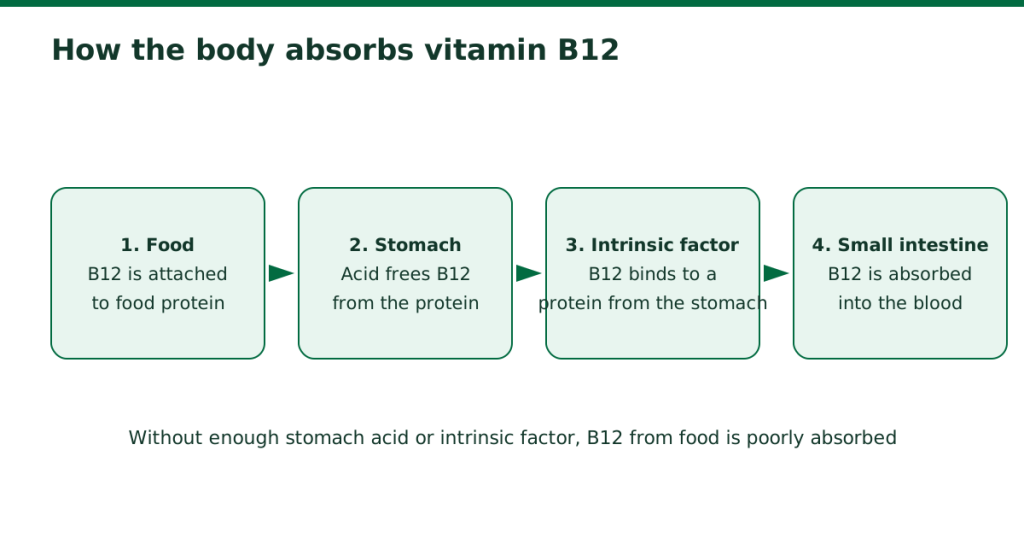
Absorption from food is a two-step process, and it explains why some people run low even with a good diet.
The Two Step Process
- Stomach acid separates B12 from the protein it is attached to in food.
- The freed B12 binds to intrinsic factor, a protein made in the stomach, and the two are absorbed together in the small intestine.
Why Absorption Has a Limit
Intrinsic factor can only carry a small amount at a time. Absorption drops sharply once a single dose goes beyond roughly 1 to 2 mcg. This is why B12 is better spread across meals than taken in one large amount from food.
Absorption From Supplements
Supplement B12 is not attached to protein, so it skips the first step. It still needs intrinsic factor.
Daily Vitamin B12 Requirement
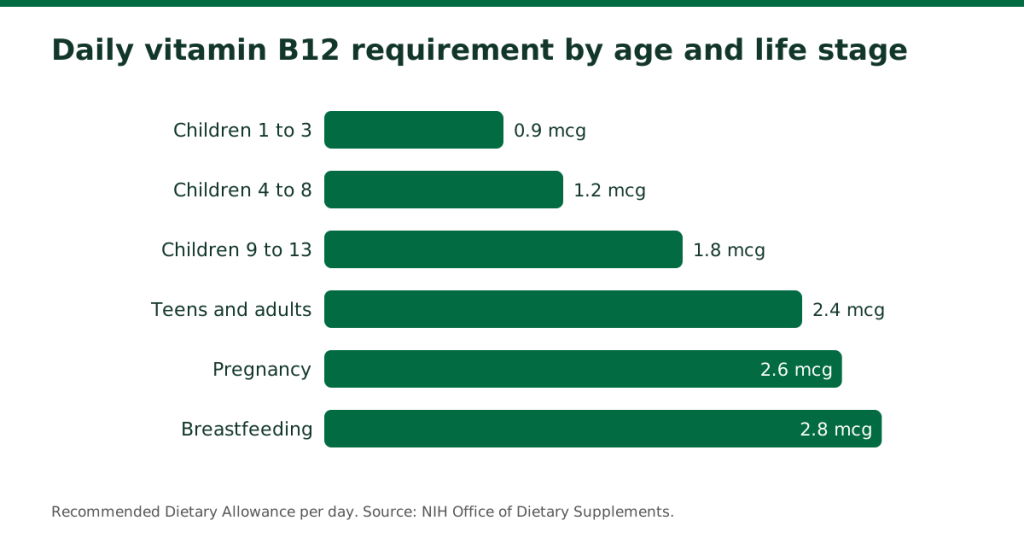
The NIH sets a Recommended Dietary Allowance (RDA) by age and life stage.
RDA by Age and Life Stage
| Group | Daily RDA (mcg) |
|---|---|
| Children 1 to 3 years | 0.9 |
| Children 4 to 8 years | 1.2 |
| Children 9 to 13 years | 1.8 |
| Teens 14 to 18 years and adults | 2.4 |
| Pregnancy | 2.6 |
| Breastfeeding | 2.8 |
Differences Between Country Guidelines
Official figures differ slightly between countries. The US uses 2.4 mcg for adults, the UK NHS suggests 1.5 mcg, and the European Food Safety Authority sets an adequate intake of 4 mcg. Check local guidance when planning a diet or supplement.
Vitamin B12 Foods
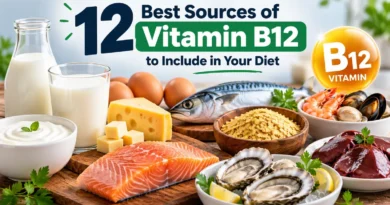
Only animal foods contain B12 naturally. Plant foods contain none unless fortified.
Animal Food Sources
| Food | Approximate B12 per serving (mcg) |
|---|---|
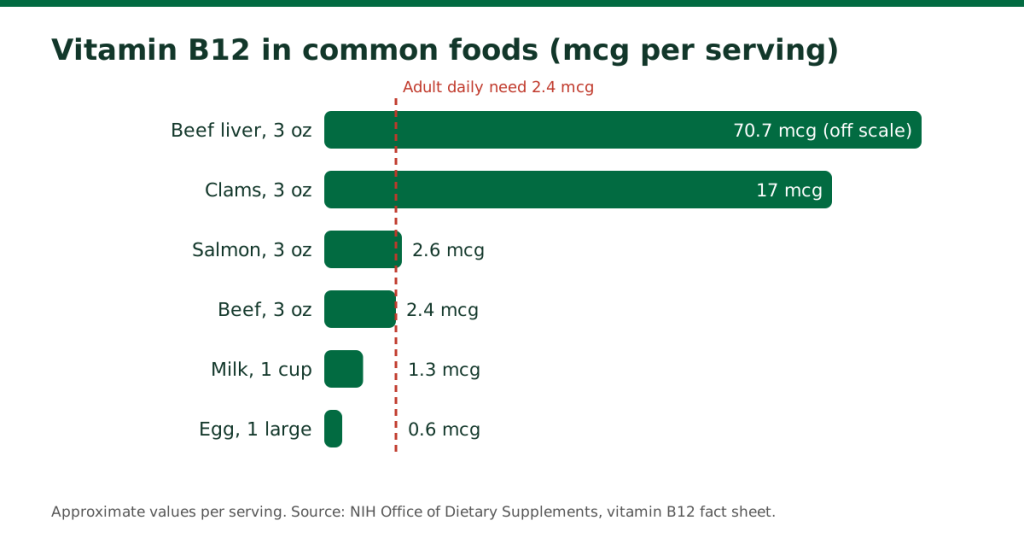
| Beef liver, 3 oz | 70.7 |
| Clams, 3 oz | 17 |
| Salmon, 3 oz | 2.6 |
| Beef, 3 oz | 2.4 |
| Milk, 1 cup | 1.3 |
| Egg, 1 large | 0.6 |
Fortified and Plant Based Options
Fortified breakfast cereals and fortified nutritional yeast are the main plant based options. In practice, the quickest check is the Nutrition Facts label, since B12 is only listed on a food label when it has been added. Unlike fat-soluble vitamins, B12 does not depend on dietary fat for absorption.
A Simple Example Calculation
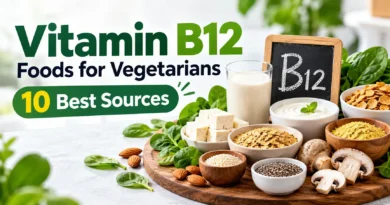
One cup of milk (1.3 mcg) plus two eggs (1.2 mcg) gives about 2.5 mcg, which already meets the adult RDA of 2.4 mcg. Dairy products are the best source of vitamin B12 for vegetarian people.
Vitamin B12 Deficiency
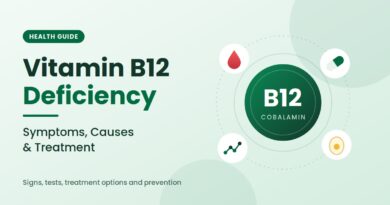
The body stores 1,000 to 2,000 times the amount typically eaten in a day, so symptoms can take several years to appear.
Signs and Symptoms
- Tiredness and weakness
- Pale skin and heart palpitations
- Numbness or tingling in the hands and feet
- Balance problems
- Poor memory, confusion, and depression
- A sore mouth or tongue
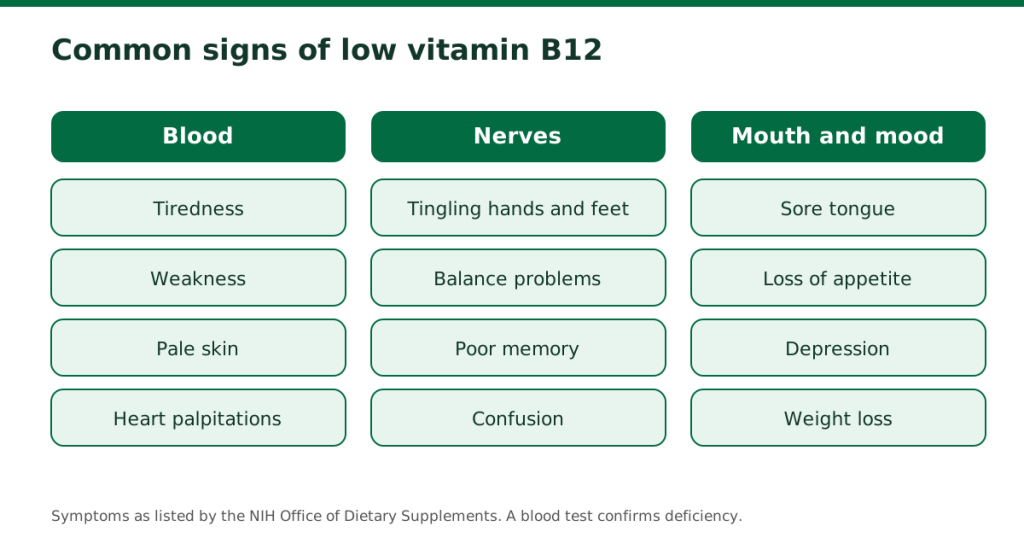
Nerve damage can happen even when anemia is absent, so early treatment matters. Anemia can also come from low iron, which is why a blood test is needed to find the real cause.
Who Is at Higher Risk
- Adults over 50: many do not make enough stomach acid to release B12 from food. The NIH reports deficiency in 3% to 43% of older adults.
- Vegetarians and vegans: diets with little or no animal food provide little B12.
- People with pernicious anemia: the body does not make intrinsic factor.
- People with stomach or bowel conditions: celiac disease and Crohn’s disease can reduce absorption.
- People taking certain medicines: metformin and acid reducing drugs can lower absorption.
How Deficiency Is Tested
Labs usually treat a serum B12 level below 200 or 250 pg/mL as low. When results fall in a borderline range, doctors may also check methylmalonic acid (MMA) to confirm the diagnosis.
Vitamin B12 Supplements and Injections
B12 is sold alone, in B complex products and in multivitamins.
Supplement Forms
| Form | Notes |
|---|---|
| Cyanocobalamin | The most common supplement form |
| Methylcobalamin | Active form, widely sold |
| Adenosylcobalamin | Active form, less common |
| Hydroxycobalamin | Used in some prescription products |
Research has not shown that any one form works better than the others. Adults over 50 are advised to get most of their B12 from fortified foods or supplements, because these are absorbed more easily than the B12 bound in food.
B12 Injections
Doctors usually treat pernicious anemia and confirmed deficiency with B12 injections, though very high oral doses may also work in some cases.
Claims About Energy
Supplements are often promoted for energy and athletic performance. The NIH notes that B12 does not provide these benefits in people who already get enough from food.
Vitamin B12 Safety
Is Too Much Vitamin B12 Harmful?
The NIH states that B12 has not been shown to cause harm, even at high doses. Supplement doses vary widely, so the Supplement Facts label should be checked. A balanced diet remains the base, with supplements used where a real gap exists.
Medicines That Affect B12
Metformin and acid reducing drugs can lower B12 absorption. A doctor or pharmacist can advise on testing when these medicines are used long term.
FAQ
What is vitamin B12 in simple words?
Vitamin B12 is a nutrient that helps the body make red blood cells, keep nerves healthy, and produce DNA. It is found naturally in meat, fish, eggs, and dairy products.
What is the best source of vitamin B12?
Beef liver and clams are the richest food sources. For everyday meals, fish, meat, eggs, milk and dairy products supply useful amounts.
What are the first signs of low vitamin B12?
Early signs are usually tiredness, weakness, and pale skin. Tingling in the hands and feet can follow. A blood test is the only way to confirm a deficiency.
How much vitamin B12 is needed per day?
Adults need 2.4 mcg per day, according to the NIH. The need rises to 2.6 mcg in pregnancy and 2.8 mcg during breastfeeding.
Can vegetarians get enough vitamin B12?
Vegetarians who eat dairy and eggs can often meet the requirement. Vegans need fortified foods or a supplement, since plant foods have no natural B12.