How to Be Productive Every Day: Practical Tips & Habits
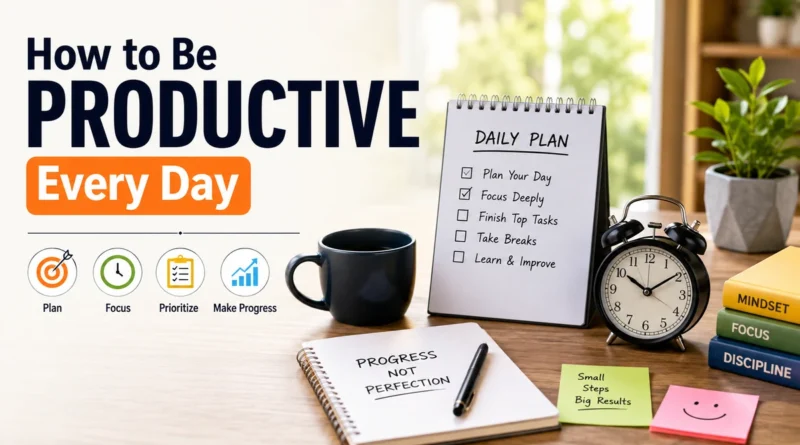
Most people do not fail at productivity because they lack willpower. They fail because they never build a system that works with their daily routine. Productivity is not about doing more work. It is about doing the right work at the right time with less stress.
This guide shares practical, easy to follow habits that help you stay productive every single day, backed by real examples you can apply right away.
What Does Productivity Really Mean
Productivity is often confused with being busy. Being busy means your day is full of tasks. Being productive means your day is full of tasks that actually move you forward.
A person who answers fifty emails but misses their main project deadline is busy, not productive. A person who finishes three important tasks and leaves the rest for tomorrow is productive.
The real formula is simple:
Productivity = Meaningful output ÷ Time and energy spent
Why Daily Productivity Matters
Small daily improvements create large long term results. If you save even thirty minutes a day through better habits, that adds up to more than 180 hours a year. This extra time can go toward learning a new skill, growing a business, or simply resting without guilt.
Daily productivity also reduces stress. When tasks are planned and prioritized, the mind feels lighter because nothing important is forgotten.
Best Daily Habits for Productive People
1. Start With a Clear Morning Routine
A fixed morning routine removes decision fatigue. Successful people rarely start their day by checking notifications first. Instead, they follow a set pattern such as:
- Wake up at the same time daily
- Drink water before anything else
- Spend ten minutes planning the day
- Avoid phone screens for the first thirty minutes
Example: A freelance writer who checks emails first thing often loses the first hour reacting to other people’s requests. The same writer who plans the day first finishes the main writing task before noon.
2. Prioritize Tasks the Right Way
Not all tasks deserve equal attention. Use a simple task prioritization method to separate urgent work from busy work. Sorting tasks into “must do,” “should do,” and “can wait” prevents wasted effort on low value activities.
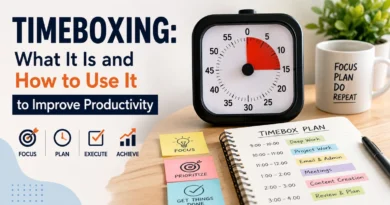
3. Use Time Blocking
Time blocking means assigning a fixed slot of time to a single task instead of keeping an open ended to do list. For example, blocking 9 AM to 11 AM only for deep work like writing or coding, and keeping 2 PM to 3 PM for meetings and calls.
This method works because it stops multitasking, which research repeatedly shows lowers output quality.
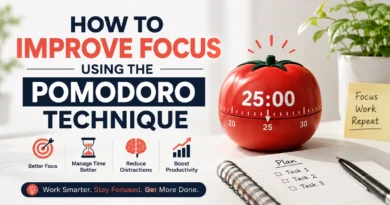
4. Apply the Pomodoro Technique
The Pomodoro Technique breaks work into short, focused sessions, usually 25 minutes of work followed by a 5 minute break. This is especially useful for tasks that feel overwhelming, since the brain finds it easier to commit to 25 minutes than to an unclear stretch of hours.
Example: A student preparing for exams often struggles with a three hour study block. Breaking it into six Pomodoro sessions makes the same three hours feel manageable and less tiring.
5. Do One Thing at a Time
Single tasking beats multitasking almost every time. Switching between tasks costs the brain extra time to refocus, known as switching cost. Finishing one task fully before starting another leads to faster completion and fewer mistakes.
6. Take Real Breaks
Breaks are not wasted time. A short walk, stretching, or simply stepping away from the screen restores focus. Skipping breaks often leads to slower work later in the day due to mental fatigue.
7. Review the Day Before Ending It
Spend five minutes each evening reviewing what got done and what did not. This habit, sometimes called a daily reflection, helps carry forward unfinished tasks smoothly into the next day instead of forgetting them.
Habit vs Benefit at a Glance
| Habit | Main Benefit | Best For |
|---|---|---|
| Morning routine | Reduces decision fatigue | Everyone |
| Task prioritization | Focuses effort on what matters | Busy professionals |
| Time blocking | Prevents distraction and overload | Deep work tasks |
| Pomodoro Technique | Makes big tasks feel manageable | Students, writers |
| Single tasking | Improves speed and accuracy | Detail heavy work |
| Evening review | Keeps tomorrow organized | Long term planning |
Common Productivity Mistakes to Avoid
Many people try to be productive but end up burning out because of a few common errors:
- Overplanning the day, leaving no room for unexpected work
- Ignoring rest, thinking more hours always means more output
- Multitasking, which feels productive but slows real progress
- Skipping priorities, doing easy tasks first instead of important ones
- No fixed end time, letting work stretch endlessly into personal time
Avoiding these mistakes matters as much as building good habits.
Tools That Can Help
While habits matter most, simple tools support consistency:
- A task prioritization method like MoSCoW helps sort what must be done first
- Timer apps support the Pomodoro Technique without manual tracking
- A basic calendar app is enough for time blocking, no complex software needed
The goal is a system that is easy to maintain daily, not one that takes more effort than the actual work.
FAQs: Be Productive Every Day
How can I be productive every day without feeling tired?
Balance focused work sessions with proper breaks. Techniques like the Pomodoro Technique prevent burnout by building rest into the schedule itself.
What is the best time of day to do important work?
Most people have higher focus in the morning hours. Assign the hardest tasks to this time.
Can productivity habits work for students as well as professionals?
Yes. Task prioritization, time blocking, and the Pomodoro Technique apply equally to studying, freelance work, and office jobs.
How long does it take to build a productive routine?
Most habits become natural after two to three weeks of consistent practice. Start small with one habit before adding more.
Final Thoughts
Being productive every day does not require complicated systems. It requires a few consistent habits: a clear morning routine, smart task prioritization, focused work blocks, and honest evening reviews. Start with one habit this week, build it into a routine, and add the next one only once it feels natural.