

What Is the MoSCoW Prioritization Method and How Does It Work? (With Example)
Every project has more tasks than time. Many teams struggle to decide what to build first, what can wait, and what should be dropped completely. This is where the MoSCoW Prioritization Method becomes useful. It is a simple framework that helps teams sort tasks based on real importance instead of guesswork, making task prioritization an essential time management skill for managing workloads effectively.
This article explains what the MoSCoW method is, how it works, and how you can apply it with a practical example.
What Is the MoSCoW Prioritization Method
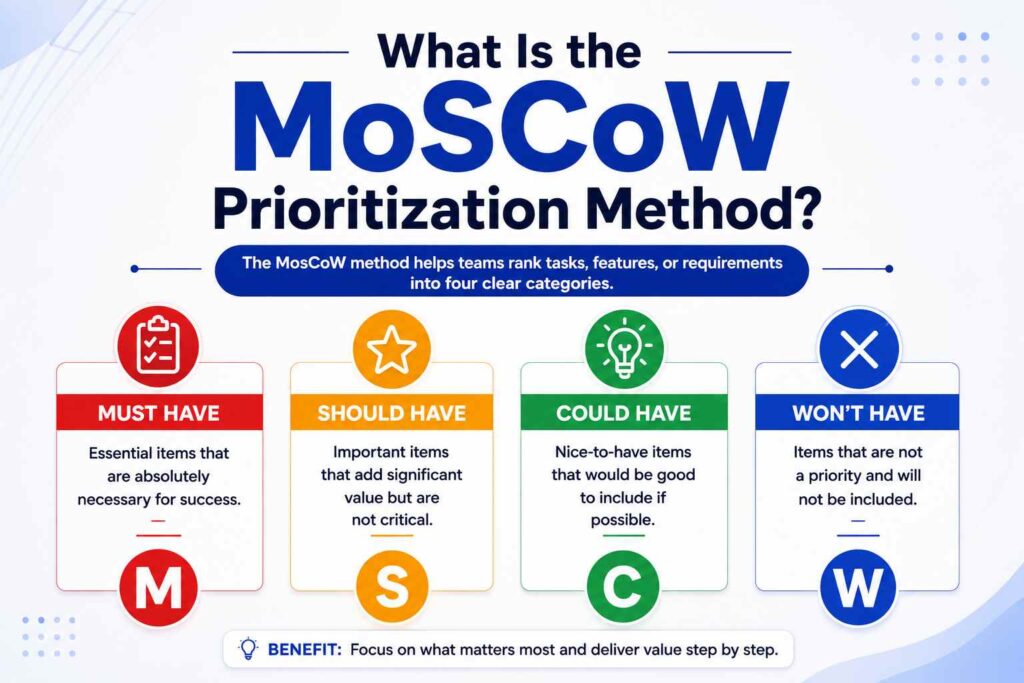
The MoSCoW method is a prioritization technique used to rank tasks, features, or requirements into four clear categories. It helps teams and stakeholders agree on what matters most before a project starts.
The name MoSCoW comes from the first letters of four words:
- Must have
- Should have
- Could have
- Won’t have
The small letters (o) in MoSCoW are added only to make the word easy to pronounce. They do not stand for anything.
This method was created by Dai Clegg in 1994while working at Oracle. It became popular in software development and is now used across many fields such as marketing, product management, event planning, and business strategy.
Why Teams Use the MoSCoW Method
When a project has limited time, budget, or manpower, not every task can be completed. Teams need a shared way to decide what is truly necessary and what is optional.
The MoSCoW method solves this problem by giving everyone a common language. Instead of debating endlessly, teams can label each task clearly and move forward with confidence.
Common Reasons Teams Choose This Method
- It is easy to understand, even for non technical stakeholders
- It reduces conflict during planning meetings
- It keeps the project focused on real business needs
- It creates a shared understanding between clients and teams
- It helps identify what can be removed if time runs short
The Four Categories of MoSCoW Explained
Each category in the MoSCoW method has a specific meaning. Understanding these categories properly is the key to using the method correctly.
Must Have
These are tasks or features that are absolutely required for the project to succeed. Without them, the product will not work or the project will fail to meet its core purpose.
Example: A login system for a banking app is a must have. Without it, users cannot access their accounts at all.
Should Have
These are important tasks that add real value but are not critical for the first launch. The project can still work without them, though the experience may be less complete.
Example: A password reset option is a should have. It is useful, but users can still log in without it if support is available manually.
Could Have
These are nice to have features that improve user experience but have a small impact if left out. They are usually the first things removed when time or budget becomes tight.
Example: A dark mode setting in an app is a could have. It improves comfort for some users but does not affect core functionality.
Won’t Have
These are tasks that the team agrees will not be included in the current project phase. This does not mean the idea is bad. It simply means it is not a priority right now and may be considered later.
Example: Adding voice command support in the first version of an app can be marked as won’t have for now.
How the MoSCoW Method Works Step by Step
Using the MoSCoW method is a simple process that any team can follow.
Step 1: List All Tasks or Requirements
Start by writing down everything that could be part of the project. Do not filter anything at this stage.
Step 2: Involve the Right Stakeholders
Bring together people who understand the business goals, users, and technical limits. This may include product managers, developers, designers, and clients.
Step 3: Assign Each Task a MoSCoW Category
Go through the list and sort each task into Must have, Should have, Could have, or Won’t have. Discuss disagreements openly until the team agrees.
Step 4: Set Priority Based on Available Resources
Focus first on completing all Must have tasks. Move to Should have items once the core work is stable. Add Could have features only if time and resources allow.
Step 5: Review and Adjust Regularly
Priorities can change as the project moves forward. Revisit the list at different stages to make sure it still matches business needs.
Example of MoSCoW Prioritization in Action
Imagine a team building a new online food ordering website. Here is how the MoSCoW method could be applied.
| Category | Feature |
|---|---|
| Must Have | Menu display, cart system, secure payment gateway |
| Should Have | Order tracking, email confirmation |
| Could Have | Customer reviews, loyalty points |
| Won’t Have | AI based meal recommendations for version one |
With this structure, the team knows exactly what to build first. The website can launch successfully with just the Must have features, while other features are added over time.
Benefits of Using the MoSCoW Method
- Helps teams stay focused on core goals
- Improves communication between technical and non technical members
- Makes it easier to manage limited time and budget
- Reduces last minute confusion about project scope
- Creates a clear roadmap for future updates
Common Mistakes to Avoid
- Marking too many tasks as Must have, which defeats the purpose of prioritization
- Skipping stakeholder discussion, which leads to unclear priorities
- Never reviewing the list again after the first planning session
- Confusing Could have with Should have, which affects resource planning
FAQs
What does MoSCoW stand for in project management?
MoSCoW stands for Must have, Should have, Could have, and Won’t have. It is a method used to prioritize tasks and features based on importance.
Who created the MoSCoW method?
The MoSCoW method was created by Dai Clegg in 1994 during his time at Oracle. It later became widely used in Agile project management.
Is MoSCoW only used in software development?
No. While it started in software development, the MoSCoW method is now used in marketing, event planning, business strategy, and many other fields that need clear prioritization.
What is the difference between Should have and Could have?
Should have items are important and add real value but are not critical for launch. Could have items are smaller improvements that are easy to skip without major impact.
How often should MoSCoW priorities be reviewed?
Priorities should be reviewed at every major project stage, since business needs and available resources can change over time.
Final Thoughts
The MoSCoW Prioritization Method gives teams a simple and effective way to decide what truly matters in a project. By sorting tasks into Must have, Should have, Could have, and Won’t have, teams can avoid confusion, save time, and deliver projects that meet real business needs. Whether you are managing a software product, a marketing campaign, or a business plan, this method can help you prioritize with clarity and confidence.