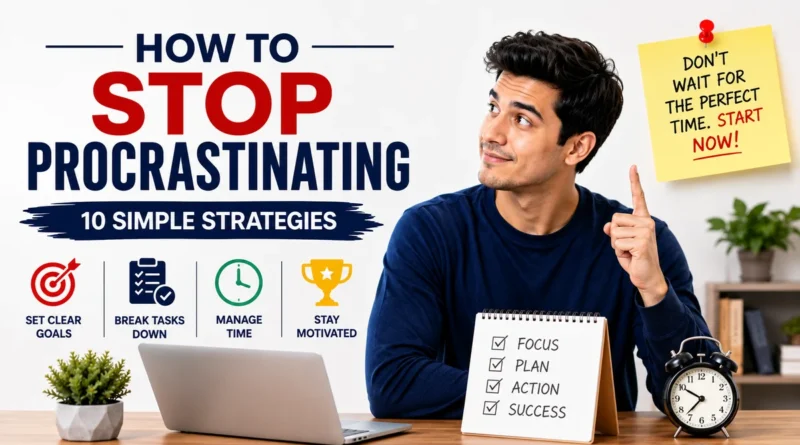
How to Stop Procrastinating: 10 Simple Strategies
Procrastination is something almost everyone deals with. You know a task is important, but you still put it off for later. Then the deadline gets close and stress takes over. If this sounds familiar, you are not alone. Studies show that nearly 20% of adults struggle with chronic procrastination, and many more deal with it occasionally.
The good news is that procrastination is not a personality flaw. It is a habit, and habits can be changed. Understanding the importance of time management can help you overcome procrastination and make better use of your time.
In this article, you will learn 10 simple and proven strategies to stop procrastinating and get more done, without burning out.
What Is Procrastination and Why Does It Happen
Procrastination means delaying a task even when you know the delay will cause problems. It is not about being lazy. Most of the time, procrastination happens because of:
- Fear of failure or fear of doing something wrong
- Feeling overwhelmed by a big or unclear task
- Low motivation because the task feels boring
- Perfectionism, where you wait for the “right” time or mood
- Poortime management skills
Understanding the real reason behind your procrastination is the first step. Once you know the cause, you can pick the right strategy to fix it.
10 Simple Strategies to Stop Procrastinating
1. Break Tasks Into Smaller Steps
Big tasks feel scary. When a project looks huge, your brain avoids it. The fix is simple: break it down.
For example, instead of writing “finish report,” break it into steps like “write introduction,” “add data,” and “review draft.” Small steps feel easy to start, and starting is often the hardest part.
2. Use the Two-Minute Rule
If a task takes less than 2 minutes, do it right away instead of adding it to your list. This simple time management techniquewas made popular by productivity expert David Allen. Replying to a quick email or washing one dish takes seconds, but delaying it adds mental clutter.
3. Try the Pomodoro Technique
The Pomodoro Technique is a simple time management method. You work for 25 minutes with full focus, then take a 5-minute break. After four rounds, take a longer break of 15 to 30 minutes.
This method works because it makes tasks feel less heavy. You are only committing to 25 minutes, not the whole task. Many people find that once they start, they keep going past the timer.
4. Set Clear Deadlines
Without a deadline, tasks can stretch forever. Set a specific date and time for each task, even personal ones. If a project does not have an official deadline, create your own and treat it seriously.
5. Remove Distractions
Your phone, social media, and noisy surroundings are major reasons for procrastination. Try these simple steps:
- Turn off phone notifications during work hours
- Use website blockers for social media
- Keep your workspace clean and quiet
- Tell people around you not to disturb you during focus time
6. Use the MoSCoW Method for Prioritization
The MoSCoW method helps you decide what truly matters. It divides tasks into four groups:
| Category | Meaning | Example |
|---|---|---|
| Must Have | Critical, cannot skip | Submit tax filing before deadline |
| Should Have | Important but not urgent | Update project documentation |
| Could Have | Nice to do if time allows | Reorganize email folders |
| Won’t Have | Not needed right now | Redesign a logo that is not urgent |
Using this method helps you focus energy on what actually matters instead of getting stuck on low-value tasks.
7. Practice the “Eat the Frog” Method
This idea comes from a quote by Mark Twain: do your hardest task first thing in the morning. Once the toughest task is done, everything else feels easier. Most people procrastinate on hard tasks the most, so tackling them early removes the mental weight for the rest of the day.
8. Reward Yourself After Completing Tasks
Your brain responds well to rewards. After finishing a task, give yourself something small, like a coffee break, a short walk, or five minutes on your favorite app. This builds a positive habit loop where your brain starts to connect task completion with something pleasant.
9. Use Accountability
Tell a friend, colleague, or family member about your task and deadline. When someone else knows about your goal, you are more likely to follow through. This is called accountability, and it works because most people do not want to admit they did not follow through on something they announced.
10. Forgive Yourself for Past Procrastination
This step is often ignored, but it matters a lot. Studies show that people who forgive themselves for procrastinating in the past are less likely to procrastinate again. Guilt and self-criticism actually increase procrastination because they lower your mood and motivation. Instead of being harsh on yourself, accept the delay, learn from it, and move forward.
How to Build Long-Term Habits Against Procrastination
Stopping procrastination once is easy. Stopping it for good takes consistency. Here are a few habits that help over time:
- Plan your day the night before so you know exactly where to start
- Track your progress using a simple notebook or app
- Review your week to see what worked and what did not
- Start small and build up, do not try to change everything at once
Frequently Asked Questions
Q: Why do I procrastinate even on things I enjoy?
This usually happens when the task feels too big or unclear. Breaking it into small steps often solves this problem.
Q: Is procrastination linked to anxiety?
Yes, procrastination and anxiety are often connected. Fear of failure or judgment can make people delay tasks to avoid uncomfortable feelings.
Q: What is the fastest way to stop procrastinating right now?
Use the two-minute rule or start with just five minutes of work. Starting small removes the mental barrier that stops you from beginning.
Q: Does the Pomodoro Technique work for everyone?
It works for most people, but some prefer longer focus blocks. You can adjust the timing to fit your own working style.
Final Thoughts
Procrastination is a habit, not a flaw. With the right strategies, like breaking tasks into smaller steps, using the Pomodoro Technique, and applying the MoSCoW method for prioritization, you can build a system that works for you. Start with one or two strategies from this list, stay consistent, and you will notice a real difference in how much you get done.