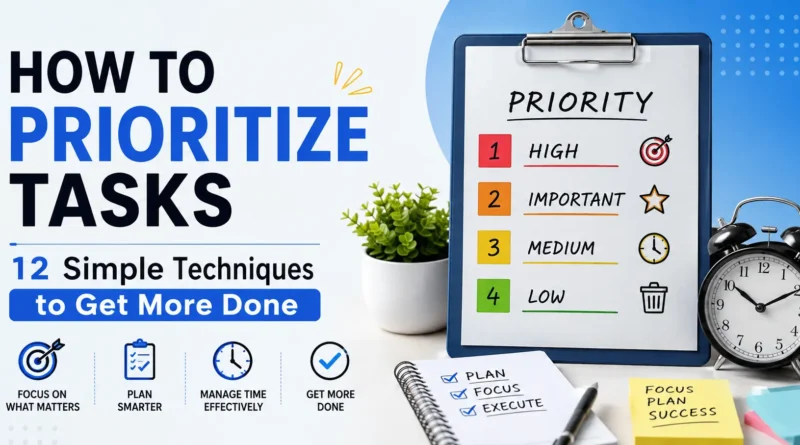
How to Prioritize Tasks: 12 Easy Ways to Get More Done
Every day brings a long list of things to do, but not everything on that list deserves the same attention. Task prioritization is the skill of deciding what to work on first, what can wait, and what you can drop completely. Without it, you end up busy all day but still miss your real goals.
This guide breaks down 12 simple and proven techniques to help you prioritize tasks, reduce stress, and actually finish the work that matters most.
Why Task Prioritization Matters
Most people do not struggle with a lack of time. They struggle with unclear priorities. When every task feels urgent, your brain treats small tasks and big tasks the same way, and that leads to burnout and missed deadlines.
Good prioritization helps you:
- Focus on high value work instead of busy work
- Reduce stress caused by an overloaded to do list
- Meet deadlines without last minute rushing
- Make faster decisions about what to do next
- Free up time for rest and personal goals
12 Techniques to Prioritize Tasks Effectively
1. The Eisenhower Matrix
This method sorts tasks into four boxes based on urgency and importance:
| Category | Action |
|---|---|
| Urgent and Important | Do it now |
| Important but not Urgent | Schedule it |
| Urgent but not Important | Delegate it |
| Not Urgent and Not Important | Delete it |
This is one of the most trusted frameworks for daily and weekly planning because it forces you to see the difference between what feels urgent and what is actually important.
2. ABCDE Method
Label every task with a letter based on its priority level. A means very important, B means important, C means nice to do, D means tasks you can delegate, and E means tasks you can eliminate. This simple labeling system removes the guesswork from daily planning.
3. Eat the Frog
This technique comes from the idea that if you do your hardest and most important task first thing in the morning, the rest of the day feels lighter. Once the biggest task is done, everything else feels manageable. Many high performers use this method because willpower is strongest early in the day.
4. The Pomodoro Technique
The Pomodoro technique breaks your work into focused sessions, usually 25 minutes long, followed by a short break. This method is great once you already know your priority tasks, since it helps you stay focused on one task at a time without distraction.
If you want to build Pomodoro technique focus into your daily routine, pairing it with a prioritized task list works best. You decide what to work on first using a method like the Eisenhower Matrix, then use Pomodoro sessions to actually complete it without interruption.
Many people also compare Pomodoro with other focus methods to see what fits their work style, such as Pomodoro vs Time Blocking, Pomodoro vs Flowtime Technique, and Pomodoro vs Deep Work. There are also fun variations of the method itself, like Pomodoro vs Marinara, Pomodoro vs Alfredo, and Pomodoro vs Napolitana, each with slightly different timer settings for people who want more flexibility than the standard 25 minute session.
5. Time Blocking
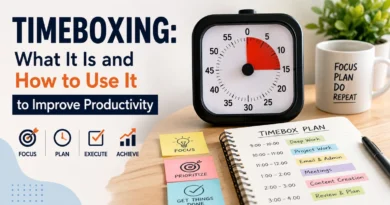
Time blocking means assigning a fixed block of time on your calendar for each task. Instead of working from an open ended list, you decide exactly when a task will happen. This reduces decision fatigue and stops tasks from spilling into the whole day.
6. The 1-3-5 Rule
Each day, plan to complete 1 big task, 3 medium tasks, and 5 small tasks. This rule keeps your day realistic instead of overloaded, and it gives you a clear sense of progress by the evening.
7. MoSCoW Method
This technique sorts tasks into four groups: Must have, Should have, Could have, and Won’t have. It is especially useful for project management and team planning, since it helps everyone agree on what truly needs to be done first.
8. Pareto Principle (80/20 Rule)
The Pareto Principle states that roughly 80 percent of your results come from 20 percent of your efforts. Identify which tasks bring the biggest results and prioritize those first, instead of spreading equal effort across everything on your list.
9. Rapid Planning Method (RPM)
RPM asks three questions for every task: What do I want? Why do I want it? What is my plan to get there? This method connects daily tasks to bigger goals, which makes prioritization feel purposeful instead of random.
10. Ivy Lee Method
At the end of each day, write down the six most important tasks for tomorrow, ranked in order of importance. Start with the first task and do not move to the next one until it is finished. This century old method is still popular because of its simplicity.
11. Energy Based Prioritization
Instead of only looking at deadlines, this method matches tasks to your energy levels throughout the day. Save demanding tasks for when you feel most alert, and handle simple or repetitive tasks when your energy naturally dips.
12. The Two Minute Rule
If a task takes less than two minutes to complete, do it immediately instead of adding it to your list. This clears out small tasks quickly and prevents your to do list from getting cluttered with minor items.
How to Choose the Right Technique
Not every method works for every person. Someone who manages a team may prefer the MoSCoW method, while someone working alone might find the Eat the Frog approach or ABCDE method more practical. Understanding the importance of time management helps you see why these techniques matter in the first place, since prioritization is really just one part of managing time well.
You can also mix methods. For example, use the Eisenhower Matrix to decide what matters most, then apply time management skills like time blocking or Pomodoro sessions to actually execute the plan.
Frequently Asked Questions
What is the best way to prioritize tasks daily?
The Eisenhower Matrix combined with the ABCDE method works well for most people since it separates urgent tasks from important ones and ranks them clearly.
What is time management and why does it matter?
Time management is the process of planning and controlling how much time you spend on different activities. It matters because it directly affects productivity, stress levels, and how well you meet your goals.
How to create a daily schedule that actually works?
Start a daily schedule by listing your top priorities using a method like the 1-3-5 rule, then block specific time slots for each task on your calendar so nothing gets skipped.
What are some simple time management tips for beginners?
Start small. Use the two minute rule for quick tasks, plan your top three priorities the night before, and avoid multitasking since it lowers focus and quality of work.
Final Thoughts
Prioritizing tasks is not about doing more. It is about doing the right things first. Try one or two techniques from this list, see what fits your work style, and build a habit around it. Over time, small changes in how you prioritize can lead to major improvements in how much you actually get done.